 by
by Introduction: Working From Anywhere Is No Longer a Dream
A decade ago, working from a beach or mountain town sounded unrealistic. Today, it’s a legal reality—thanks to digital nomad visas. Countries around the world are opening their doors to remote workers who earn income online, offering legal residency without local employment.
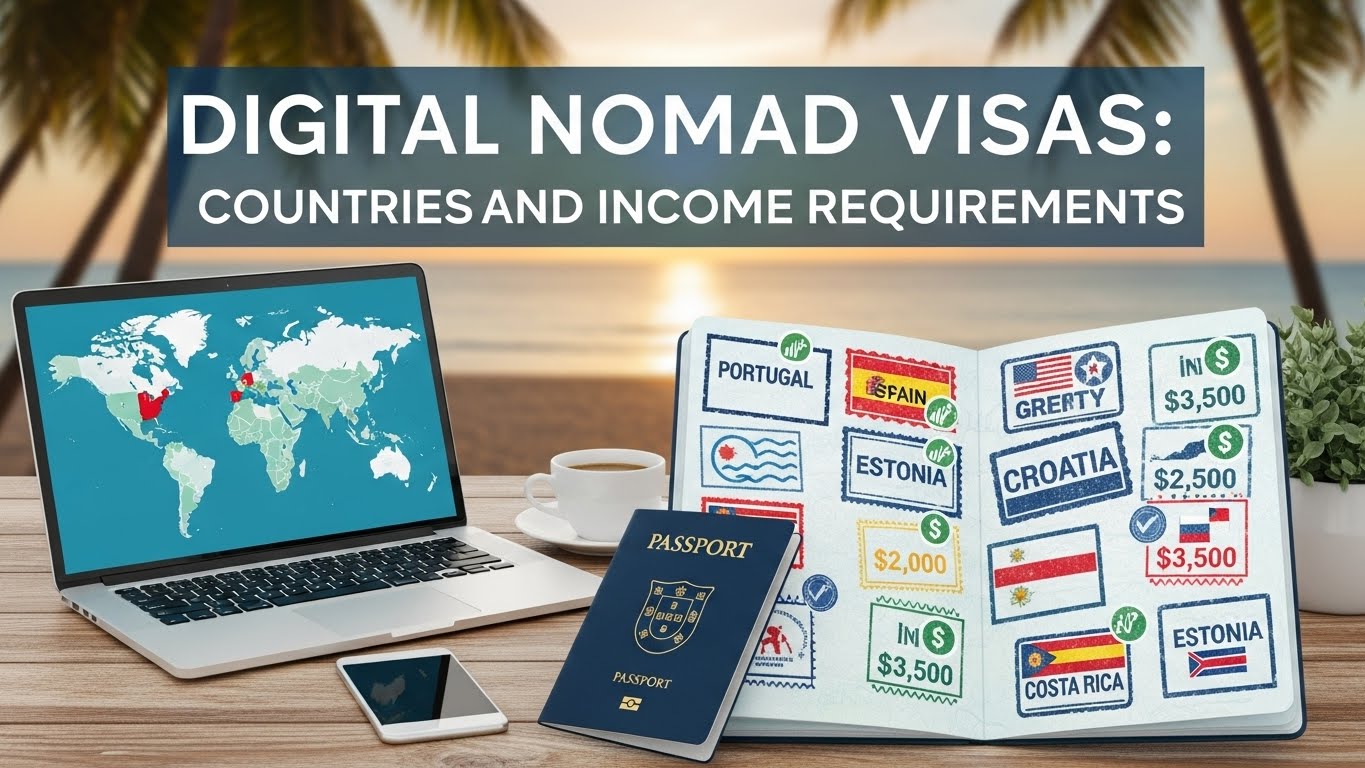
This guide breaks down digital nomad visas: countries and income requirements, helping you understand where you can go, how much you need to earn, and what it takes to live and work abroad legally as a remote professional.
Why Digital Nomad Visas Exist
Digital nomad visas emerged after governments realized that remote workers contribute to local economies without competing for local jobs. As remote work expanded globally, countries saw an opportunity to attract skilled professionals, boost tourism, and stabilize local economies.
Unlike traditional work visas, digital nomad visas are designed for foreign income earners—freelancers, remote employees, consultants, and online business owners.
What Is a Digital Nomad Visa?
A digital nomad visa allows foreign nationals to live in a country while working remotely for clients or employers based abroad. These visas typically:
- Prohibit local employment
- Require proof of remote income
- Offer temporary residency (6 months to 2 years)
- Include tax and health insurance requirements
Each country sets its own rules, making careful comparison essential.
Who Qualifies for a Digital Nomad Visa?
Most digital nomad visas require:
- Proof of stable remote income
- Employment or freelance contracts
- Health insurance coverage
- Clean criminal record
- Valid passport
Some countries also require minimum savings or tax compliance documentation.
Top Countries Offering Digital Nomad Visas and Income Requirements
1. Portugal
Portugal is one of Europe’s most popular digital nomad destinations.
Income requirement: Moderate monthly income
Why it’s attractive:
- High quality of life
- Strong internet infrastructure
- Pathways to long-term residency
Portugal balances affordability with lifestyle appeal.
2. Spain
Spain’s digital nomad visa targets remote professionals.
Income requirement: Medium income threshold
Key benefits:
- Access to EU residency
- Favorable tax incentives for some applicants
- Vibrant cities and culture
3. Croatia
Croatia was among the first to introduce a digital nomad visa.
Income requirement: Lower-to-mid range
Highlights:
- Scenic coastal lifestyle
- Simple application process
- No local income tax
4. Estonia
Estonia is a pioneer in digital governance.
Income requirement: Moderate
Why Estonia stands out:
- Fully online application process
- Tech-friendly environment
- Strong legal clarity
Estonia suits freelancers and tech workers.
5. Georgia
Georgia offers one of the most accessible options globally.
Income requirement: Low
Advantages:
- Simple residency rules
- Low cost of living
- Generous visa duration
Ideal for beginners in remote work.
6. Mexico
Mexico attracts digital nomads with flexible residency options.
Income requirement: Moderate
Why nomads choose Mexico:
- Low living costs
- Cultural diversity
- Long-term stay options
7. Thailand
Thailand’s digital nomad-friendly programs continue to expand.
Income requirement: Moderate to high
Benefits:
- Strong nomad communities
- Affordable lifestyle
- Excellent infrastructure
8. Barbados
Barbados popularized the remote work visa concept.
Income requirement: High
Best for:
- High-earning professionals
- Short-term luxury stays
9. United Arab Emirates
The UAE offers a remote work visa option.
Income requirement: High
Why it’s appealing:
- Tax advantages
- World-class infrastructure
- Strategic global location
10. Indonesia (Bali)
Indonesia continues developing digital nomad pathways.
Income requirement: Moderate
Highlights:
- Strong nomad ecosystem
- Affordable living
- Growing legal clarity
Comparing Income Requirements by Region
Low-Income Requirement Countries
- Georgia
- Croatia
- Indonesia
Medium-Income Requirement Countries
- Portugal
- Mexico
- Estonia
High-Income Requirement Countries
- Barbados
- UAE
- Spain
Choosing the right country depends on income stability and lifestyle goals.
Taxes and Digital Nomad Visas
Tax rules vary widely. Some countries:
- Exempt foreign income
- Require local tax registration
- Offer tax incentives for nomads
Always consult official guidance or a tax professional before applying.
Real-Life Example: Choosing the Right Fit
A freelance designer earning steady online income chooses Georgia due to low income requirements and minimal bureaucracy. After building savings, she later transitions to Portugal for long-term residency options.
Digital nomad visas allow flexibility—not permanent commitment.
Common Mistakes Digital Nomads Make
- Ignoring tax obligations
- Underestimating income stability requirements
- Assuming all countries allow local work
- Applying without proper documentation
Preparation prevents visa denial.
How to Choose the Best Digital Nomad Visa for You
Consider:
- Your monthly income
- Cost of living
- Time zone compatibility
- Long-term residency goals
The “best” visa is the one aligned with your life, not trends.
Key Takeaways
- Digital nomad visas legalize remote work abroad
- Income requirements vary significantly by country
- Most visas prohibit local employment
- Taxes and insurance matter
- Flexibility is the biggest advantage
Conclusion: Work Globally, Live Intentionally
Understanding digital nomad visas: countries and income requirements empowers you to design a life that fits your work, not the other way around. These visas are not shortcuts—they’re structured opportunities for those ready to work responsibly across borders.
If remote work is your future, explore related guides, share your thoughts, and take the next step toward a legally supported global lifestyle.